


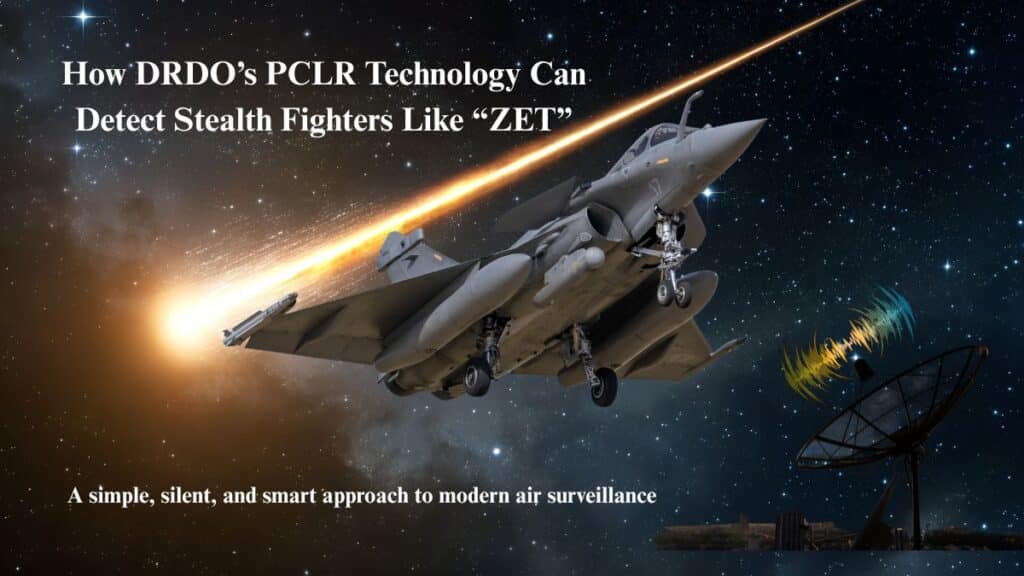
PCLR Technology: A simple, silent, and smart approach to modern air surveillance
PCLR Technology: The Art of Silent Watching
For a long time, stealth fighter aircraft were believed to be almost invisible.
They could fly high and fast without being noticed by traditional radar systems.
But technology never stands still.
India’s PCLR technology, developed by DRDO, takes a different path.
It does not chase aircraft with loud radar signals.
Instead, it quietly observes what is already happening in the sky.
This article explains, in simple language, how PCLR can help detect a stealth fighter like “ZET” and why this matters for future air monitoring systems.
Topic on Technology – Walk-on-Water Technology Trends USA in year 2026
Understanding a Stealth Fighter Like “ZET”

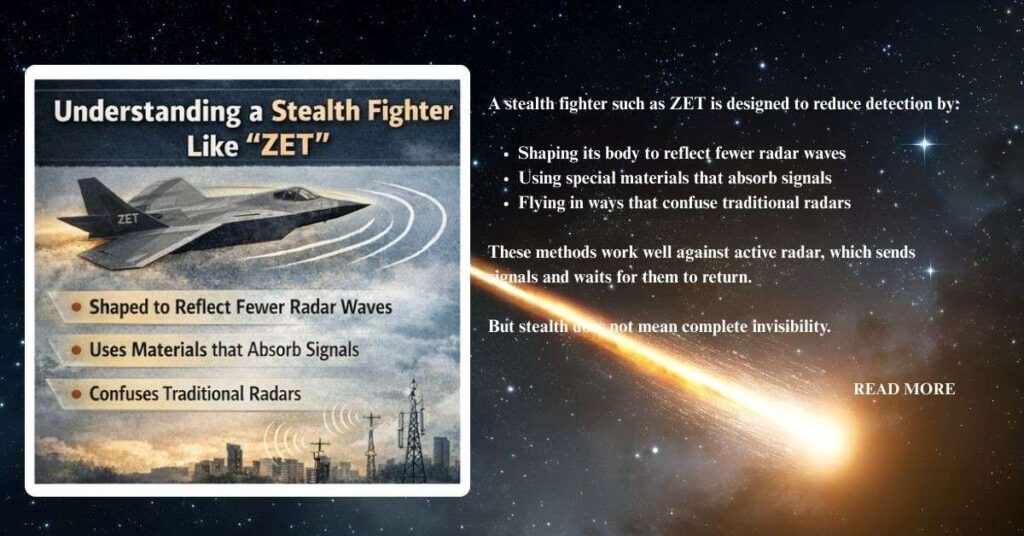
A stealth fighter such as ZET is designed to reduce detection by:
- Shaping its body to reflect fewer radar waves
- Using special materials that absorb signals
- Flying in ways that confuse traditional radars
These methods work well against active radar, which sends signals and waits for them to return.
But stealth does not mean complete invisibility.
What Is PCLR Technology by DRDO?
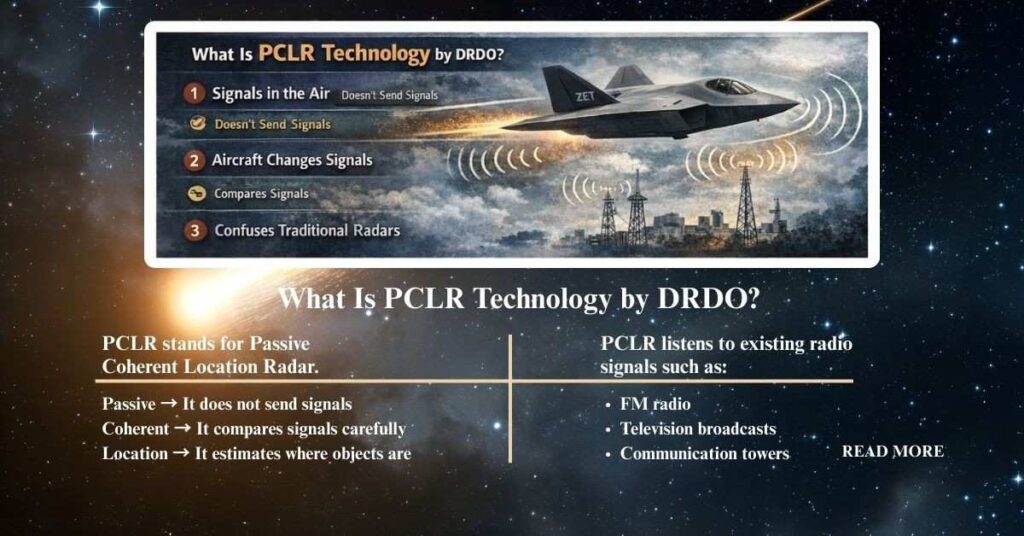
PCLR stands for Passive Coherent Location Radar.
Let’s break it down simply:
- Passive → It does not send signals
- Coherent → It compares signals carefully
- Location → It estimates where objects are
PCLR listens to existing radio signals such as:
- FM radio
- Television broadcasts
- Communication towers
These signals already fill the air every day.
PCLR uses them to observe aircraft movement without transmitting anything itself.
A Simple Story: When ZET Enters the Sky
Imagine a stealth fighter ZET flying at night.
It expects radar silence.
It expects safety.
But the air is full of radio waves from cities, stations, and towers.
As ZET flies through them, it slightly changes these signals.
That small change is enough.
How PCLR Detects a Stealth Fighter (Easy Steps)
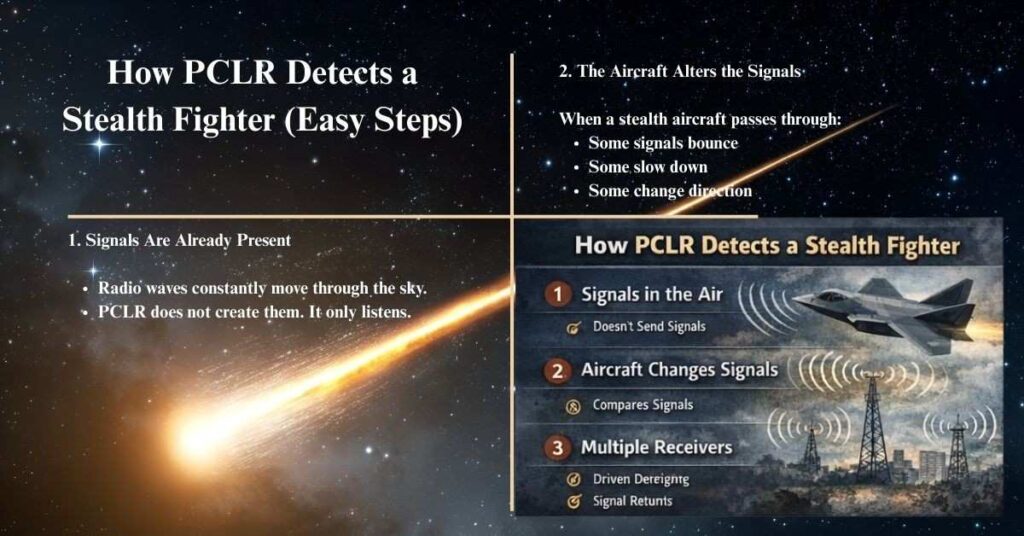
1. Signals Are Already Present
- Radio waves constantly move through the sky.
- PCLR does not create them. It only listens.
2. The Aircraft Alters the Signals
When a stealth aircraft passes through:
- Some signals bounce
- Some slow down
- Some change direction
This happens naturally.
Topic on Technology – Flying Cars Take Flight 2025-2027: How Silicon Valley Is Making It Real
3. Multiple Receivers Listen Together
Several PCLR receivers are placed in different locations.
Each hears a slightly different version of the same signal.
4. Smart Software Connects the Data
Advanced computing systems analyze:
- Timing differences
- Direction changes
- Signal patterns
This helps estimate the aircraft’s position and movement.
Why PCLR Is Useful Against Stealth Aircraft
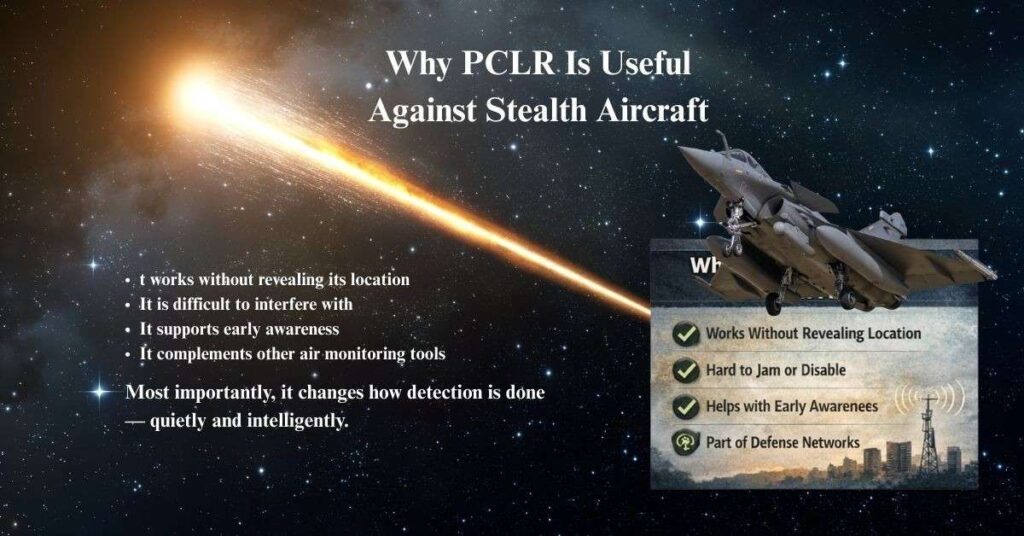
- It works without revealing its location
- It is difficult to interfere with
- It supports early awareness
- It complements other air monitoring tools
Most importantly, it changes how detection is done — quietly and intelligently.
Using PCLR as Part of a Larger System
PCLR works best when combined with:
- Long-range radars
- Airborne observation systems
- Command and control networks
This layered approach improves overall air awareness and reliability.
Pros and Cons of PCLR Technology
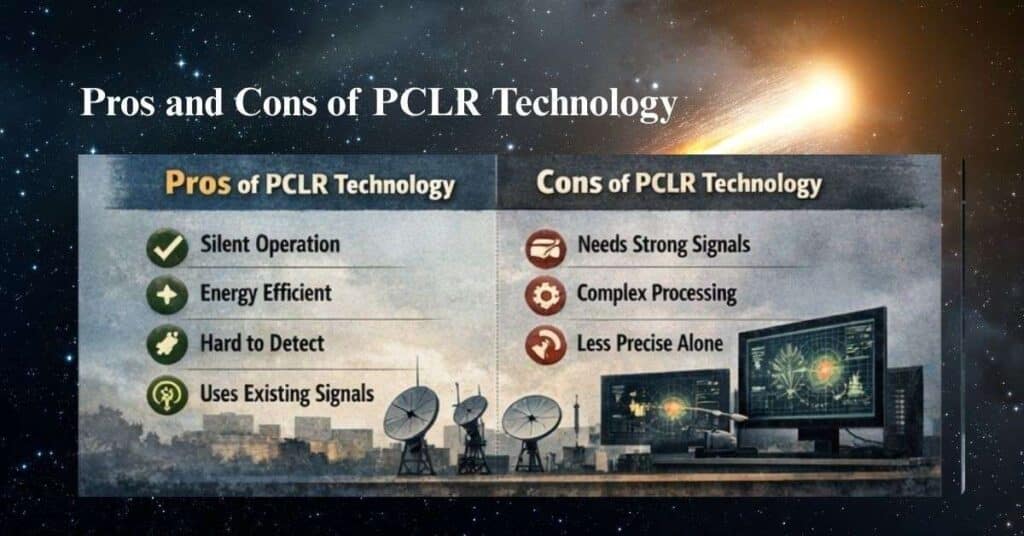
Pros (Advantages)
- Silent operation
- Energy-efficient
- Hard to detect or disturb
- Uses existing infrastructure
- Suitable for wide-area monitoring
Cons (Limitations)
- Depends on available radio signals
- Needs advanced data processing
- Less precise alone than active radar
- Best used with other systems
Pros and Cons of Stealth Fighters Like ZET
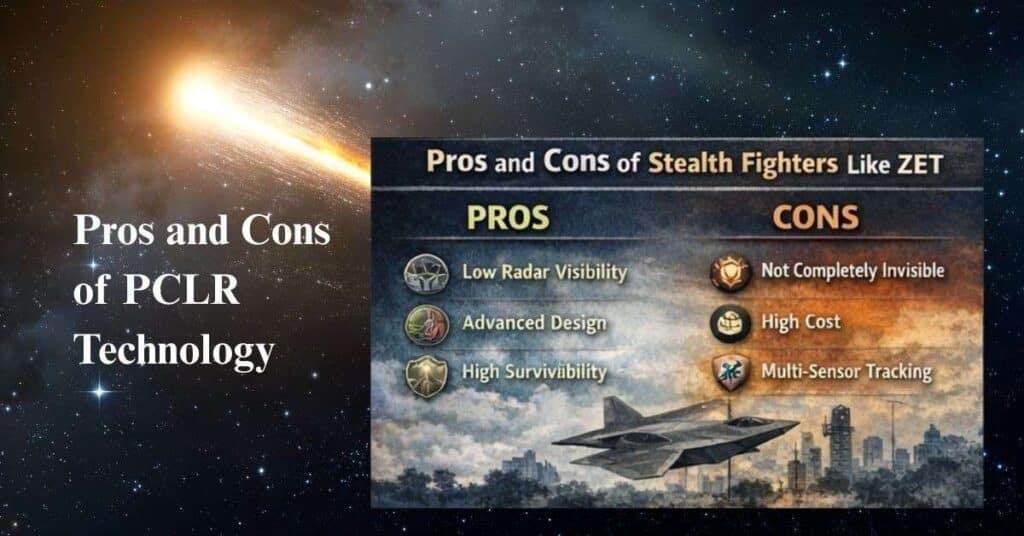
Pros
- Reduced visibility to traditional radar
- Advanced design and materials
- Strategic flexibility
- High survivability in many environments
Cons
- Not invisible to all technologies
- Vulnerable to multi-sensor tracking
- High development and maintenance cost
- Detection risk increases over time
Why This Technology Matters for the Future
PCLR represents a shift toward smart surveillance rather than aggressive detection.
It supports:
- Better situational awareness
- Reduced electronic interference
- Cost-effective monitoring
- Indigenous technological growth
For India, this means progress built on innovation rather than dependence.
Conclusion: PCLR Technology – Listening Is the New Seeing
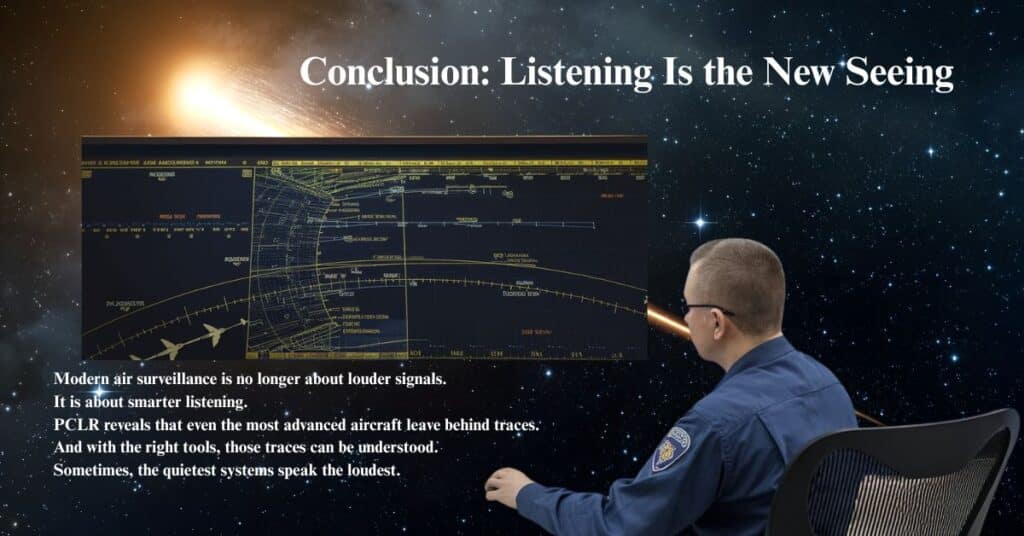
Modern air surveillance is no longer about louder signals.
It is about smarter listening.
PCLR reveals that even the most advanced aircraft leave behind traces.
And with the right tools, those traces can be understood.
Sometimes, the quietest systems speak the loudest.
Disclaimer
This article is for educational and informational purposes only.
It does not promote violence, warfare, or military action.
The technologies discussed are explained at a conceptual level based on publicly available information.